| Brand Name: | AILE |
| Model Number: | 0.5ML |
| MOQ: | 5000 pieces |
| Price: | negotiable |
| Payment Terms: | L/C, T/T |
| Supply Ability: | 1000000 Pieces per Week |
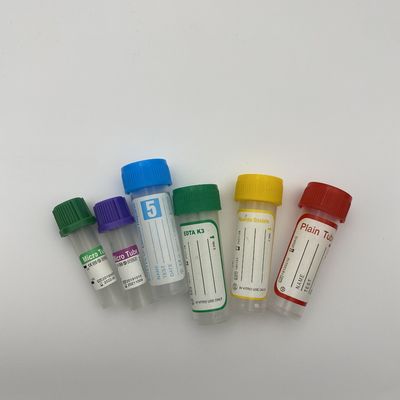
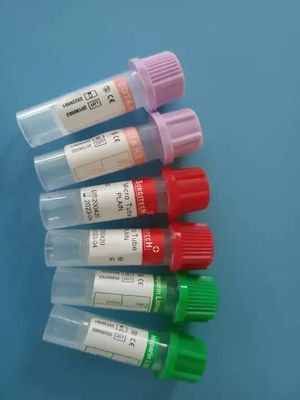
Our Vacuum Blood Collection Tubes are single-use medical devices designed for the collection, transport, and storage of venous blood specimens. The tube is a closed system, ensuring safety for both the sample and the practitioner. It is designed to be used in conjunction with compatible blood collection needles/holders as part of a standard venipuncture system.
Sterile & Single-Use: Supplied sterile and intended for single use only to prevent cross-contamination. Sterilization methods may include Gamma or EO (Ethylene Oxide) gas, ensuring the device is free from all living microorganisms.
Precise Vacuum Technology: Each tube contains a pre-measured vacuum to ensure an accurate blood-to-additive ratio, which is critical for reliable test results.
High-Quality Materials:
Tube: Manufactured from high-clarity PET (polyethylene terephthalate) or medical-grade glass. PET plastic offers shatter resistance, reducing the risk of aerosol and improving bio-safety.
Stopper: Made from a soft, high-elasticity bromobutyl elastomer that ensures a secure seal, minimizes coring during needle puncture, and helps maintain the vacuum.
User & Patient Safety: The closed system minimizes direct contact with blood. The stopper is designed for safe and easy opening while maintaining a leak-proof seal.
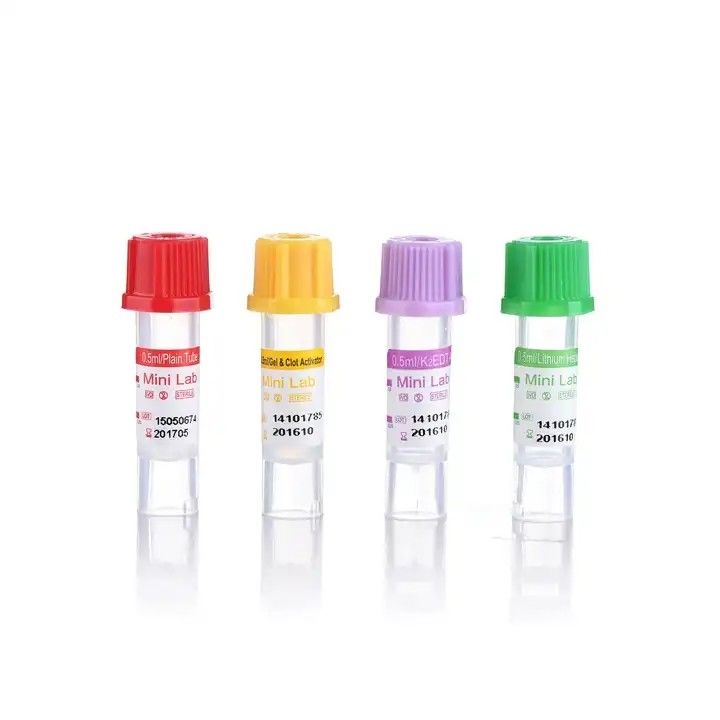
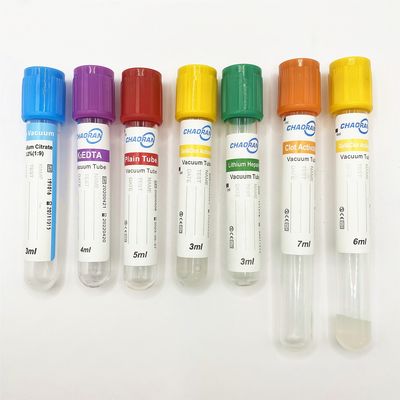
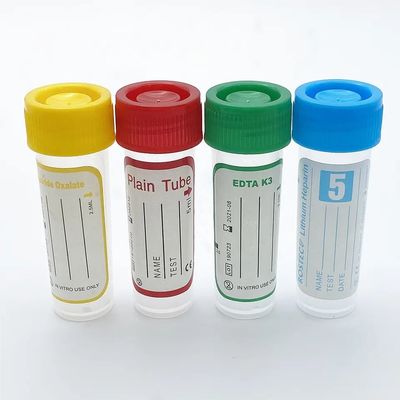
International Color Coding: Caps are color-coded according to international standards (ISO 6710) for immediate and accurate identification of additives, helping to reduce pre-analytical errors.
Primary Use: For the collection of human venous blood to obtain serum or plasma for clinical diagnostic testing.
Clinical Applications: Suitable for a wide range of laboratory analyses, including:
Clinical Chemistry
Hematology
Coagulation Studies
Serology and Immunology
Blood Banking and Transfusion Science
Hospitals and General Clinics
Independent and Hospital-Based Diagnostic Laboratories
Blood Donation Centers and Blood Banks
Academic and Research Institutions
The table below outlines common tube types based on international standards. The specific additive and vacuum volume are calibrated to the tube's stated draw volume.
| Tube Cap Color | Additive / Coating | Mechanism of Action | Typical Clinical Applications |
|---|---|---|---|
| Red | No Additive or Silica (Clot Activator) | Allows blood to clot naturally. Silica particles accelerate the clotting process by activating factor XII. | Serum chemistry, serology, blood grouping and cross-matching. |
| Gold / Yellow | Serum Separator Gel with Clot Activator | Clot activator promotes rapid clotting. During centrifugation, the gel forms an inert barrier between the serum and the blood clot. | Routine serum chemistry testing in primary tubes; samples can be stored and transported directly. |
| Lavender / Purple | EDTA (K2 or K3 salt) | Binds calcium ions (Ca2+) to prevent blood clotting by chelation. Preserves cell morphology. | Hematology (Complete Blood Count / CBC), HbA1c, blood smear preparation. |
| Light Blue | Buffered Sodium Citrate (3.2% or 3.8%) | Binds calcium in a chelated form, required for coagulation tests. The tube maintains a precise 1:9 ratio of anticoagulant to blood. | Coagulation studies (PT, APTT, D-Dimer). |
| Green | Heparin (Lithium or Sodium salt) | Activates antithrombin to inhibit thrombin, preventing clot formation. | Plasma chemistry determinations, STAT (urgent) biochemistry tests. |
| Gray | Potassium Oxalate / Sodium Fluoride or EDTA / Sodium Fluoride | Fluoride inhibits glycolysis (prevents glucose breakdown by cells); oxalate or EDTA acts as the anticoagulant. | Glucose, lactate, and alcohol testing. |
| Black | Sodium Citrate (3.8%) | Specific 1:4 ratio of anticoagulant to blood, designed for Westergren method. | Erythrocyte Sedimentation Rate (ESR) testing. |
Standards: Manufactured in compliance with international standards for medical devices, such as EN ISO 6710:2017 (Single-use containers for human venous blood specimen collection).
Certifications: Products may carry CE marking (declaration that the product meets EU standards for health, safety, and environmental protection) and are manufactured under quality management systems like ISO 13485. Approval from bodies like the US FDA or CFDA is available on specific product variants.
Shelf Life & Storage:
Shelf life is typically between 18 and 24 months
Store between 4°C and 25°C. Protect from sunlight, humidity, and do not freeze. Do not use beyond the expiry date.
Inner Packaging: Tubes are packed in trays or polybags, with options for individually sealed sterile packaging.
Outer Carton: Packaged in standard export cartons suitable for safe transport.
![]()