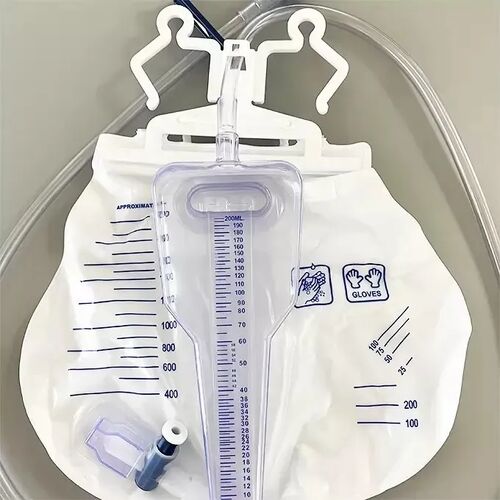
Singapore, Singapore – The Ureteral Catheter is becoming a critical tool in Southeast Asia's healthcare sector, especially for patients undergoing dialysis treatments. Known for its ability to efficiently drain urine, the Ureteral Catheter plays a significant role in reducing complications and improving recovery times for patients with kidney issues.
In countries like Malaysia, Thailand, and Indonesia, where kidney disease rates are rising, healthcare providers are increasingly adopting Ureteral Catheters to help manage post-dialysis recovery. The catheter’s biocompatible and flexible design ensures that urine is properly drained, minimizing the risk of infection and urinary tract obstruction, common complications following dialysis.
At a prominent hospital in Bangkok, the Ureteral Catheter was used on a patient after a successful dialysis session. The catheter provided effective drainage, contributing to faster recovery and reducing the risk of fluid buildup, a key concern in dialysis care. Healthcare providers have noted that patients using the Ureteral Catheter report significantly shorter recovery periods and a lower incidence of complications.
As demand for efficient dialysis care rises in Southeast Asia, the Ureteral Catheter is proving to be an indispensable tool for improving patient outcomes and quality of life.
Berlin, Germany – The Zebra Nitinol Core Guidewire is making waves in European vascular medicine, offering a revolutionary approach to precision in complex procedures. The guidewire, made from high-performance Nitinol, is reshaping how healthcare professionals navigate vascular pathways, enhancing safety and efficiency during catheterization.
In a recent case at a leading cardiovascular clinic in France, the Zebra Guidewire was used during a challenging coronary angioplasty procedure. Its flexible, radiopaque tip allowed real-time X-ray visualization, enabling surgeons to navigate tortuous arteries with unmatched precision. This resulted in reduced procedure time and improved patient recovery.
The guidewire’s biocompatible materials and low-friction surface further minimize complications such as vessel trauma and infection, making it a preferred choice for hospitals across Europe. As adoption grows, the Zebra Nitinol Core Guidewire is cementing its position as a must-have tool for vascular interventions, helping to set new standards of care and improving patient outcomes.
This breakthrough is not just improving vascular procedures in Europe but also driving forward the future of interventional medicine, positioning the Zebra Guidewire as a game-changer in the industry.
As hospitals across America strive to improve post-surgical recovery, many are increasinglyadopting hollow wound drainage systems to manage fluid collection more effectively. Theseadvanced systems offer enhanced fluid drainage capabilities, reducing the risk of complicationssuch as fluid retention, infection, and wound dehiscence-common issues that can prolongpatient recovery.
The hollow wound drainage system is designed with an anti-reflux valve, ensuring a one-wayflow that prevents fluid backflow, further minimizing the chance of infection. This design isparticularly beneficial in surgeries like plastic surgery, neurosurgery, and orthopedic procedureswhere effective fluid management is critical for optimal healing.
Hospitals in the U.S. are also drawn to these systems because of their ease of use, with features likePVC drainage tubing and sterile components that ensure a smooth, safe recovery process forpatients. As a result, hollow wound drainage systems are becoming the standard for post-surgicacare, offering a safer, more reliable solution for post-operative fluid management across thecountry.
In response to the growing demand for safer, more effective post-operative care, European surgeons are increasingly adopting silicone suction reservoirs with luer cap designs to improve fluid management following surgery. These advanced drainage systems provide superior control over fluid collection, reducing the risk of infections and fluid retention that can complicate recovery.
The luer cap design offers greater safety and ease of use during surgical procedures, making the reservoirs simpler to connect and disconnect, while minimizing the potential for contamination. Surgeons are also benefiting from the anti-reflux valve feature, which prevents backflow, ensuring that fluid collection is both efficient and hygienic.
Hospitals across Europe have reported improved patient outcomes and quicker recovery times, as the silicone material’s biocompatibility and flexibility provide an optimal environment for post-surgical care. With increasing recognition of its benefits, this innovative solution is becoming the new standard in post-operative fluid drainage for a variety of surgical specialties, including neurosurgery, plastic surgery, and orthopedic procedures.
In Europe, sterile Ryle’s tubes are playing a critical role in improving the management of gastric decompression for ICU patients. These specialized feeding tubes are increasingly utilized in intensive care units to manage conditions like abdominal distension, gastric retention, and post-surgical complications. By providing a reliable and safe method for gastric fluid drainage, sterile Ryle’s tubes help prevent the risk of infection and reduce patient discomfort.
With their radiopaque design, these tubes offer clear visibility on X-rays, allowing medical staff to easily monitor the tube’s placement and ensure proper functioning. The disposable nature of these tubes further minimizes the risk of cross-contamination, making them ideal for critical care environments.
As European healthcare systems continue to prioritize patient safety and efficiency in ICU care, sterile Ryle’s tubes are increasingly becoming the go-to solution for gastric decompression. Their widespread adoption is helping hospitals provide safer and more comfortable care for post-surgical patients, ultimately improving recovery outcomes.
In recent years, Safety Pen Type Needles have become a game-changer in the European healthcare market, particularly in blood collection procedures. With growing concerns over needle-stick injuries and patient discomfort, the demand for self-retracting pen needles has surged. These innovative needles are designed with a self-retracting safety mechanism, significantly reducing the risk of accidental injuries during blood draws.
Hospitals across Europe are adopting Safety Pen Type Needles for their ability to provide precise and comfortable blood collection, improving patient experience while minimizing pain and trauma. The ergonomic design and sharp, smooth needle tip ensure that each procedure is as quick and painless as possible, even for pediatric and geriatric patients who are particularly sensitive to needle-based interventions.
Furthermore, these needles come sterilized and single-use, offering a high level of hygiene and safety. With the added benefit of a reliable, retractable feature, healthcare providers can ensure safer handling and proper disposal, further improving clinical workflows and patient care.As Safety Pen Type Needles continue to revolutionize blood collection practices, European healthcare providers are seeing a notable reduction in complications and an overall improvement in patient satisfaction.